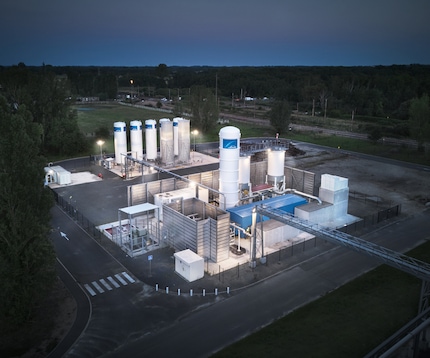
On-Site Supply Modes
Discover Linde's flexible and cost-effective gas supply modes that scale with your business.
As a response to energy cost volatility, Linde developed PowerOptimizer - an innovative AI-powered solution that dynamically adjusts plant operations for optimal production. This is a story of reacting to change in more ways than one.

In 2024, global electricity demand surged by 4.3% - well above the 10-year average of 2.6% - driven predominantly by digitalization, electric vehicles, and extreme heat. At the same time, electricity price volatility has surged, with hourly prices swinging by over 1,000% as renewables like wind and solar become dominant. Together, these pressures make smart energy management a global imperative - one that takes innovation to tackle.
Demand response - enabled by AI - is one of the most practical solutions. In plant operations this means adjusting energy use automatically: "ramping production up or down to match electricity price and grid conditions, without disrupting output for customers," explains Inês Félix, Senior Data Scientist in the Global AI and Digital team and Technical Lead of the PowerOptimizer Product. "The Onsite Bulk Gases business in Germany knew there must be a way to optimize operations within a fluctuating market," she adds. And so, a collaboration was born.

At Linde, energy can account for up to 80-90% of total production costs for Air Separation Units (ASUs) - the massive plants that draw in ordinary air and separate it into oxygen, nitrogen, and argon. While part of this electricity is secured in advance through futures contracts, in several regions a significant share is purchased on the short-term market, where prices have become increasingly volatile in recent years. "Factoring these rapid, often hourly, fluctuations into production planning is a highly complex and time-consuming task, especially when done manually," explains Philipp von Breitenbuch, Associate Director of AI/Digital Commercialization and Commercial Lead for PowerOptimizer. Especially since many ASUs are operated simultaneously via Linde's so-called Remote Operating Centers. As a result, many ASUs are adjusted manually (where capacity allows) or run at steady, or so-called "flat" settings - leaving valuable cost-saving opportunities untapped. Until now.
The Global AI and Digital team got to work and developed an optimization algorithm that calculates the cost-optimal production schedule for each hour while adhering to the weekly production target. "Supplying our customers safely and reliably is our primary concern: but we want to do that in the most cost-effective way," explains Félix. To this end, PowerOptimizer uses AI-based learning and optimization to determine production quantities in near real time and directly feeds them into the plant’s control system. "This means the ASU can automatically ramp up when electricity is cheap and scale down when prices rise," says Félix.

By factoring in electricity price forecasts, ambient temperature, product demand, and plant constraints, PowerOptimizer makes hourly load-planning decisions on a daily basis fully automatically. The result: greater participation in dynamic energy markets, full use of each ASU’s flexibility, and significant cost savings. But there’s another benefit.
As a large industrial facility, such flexibility aligns strongly with grid-friendly practices. According to the IEA, demand response is "an important source of flexibility for managing the impact of variable renewables and growing electricity demand on the stability and reliability of electricity grids."
Such "flex" however, is only possible at plants with bulk storage, as Félix explains: "For our tonnage plants where the gases directly feed pipelines into a chemical plant for example, the flow must always match consumption." It's the liquid storage buffer that makes flex possible and PowerOptimizer is already showing promise at such plants.
Gerrit Spremberg, is Plant Manager in the ASU Roethenbach, Germany where PowerOptimizer was piloted. "Many factors affect optimal plant operation," he says, "This complexity was successfully reflected in a mathematical model of the plant and now, with the help of AI, optimum production planning can be done automatically which means more efficient operation and cost savings." After many tests and successful adjustments, PowerOptimizer was rolled out to several other plants across Germany, Switzerland and UK, with wider roll-out across regions in Southeast Asia, New Zealand and USA ongoing.
Just as PowerOptimizer flexes with a changing market, Inês Félix likes to think it reflects the wider approach to AI at Linde: "Gases will always be gases," she says, "but there's no doubt that AI is changing the game in terms of how we operate. The potential is huge, and we are determined to realize it." It seems that the innovative power of Linde is optimized when it combines AI expertise with business know-how.
Discover Linde's flexible and cost-effective gas supply modes that scale with your business.
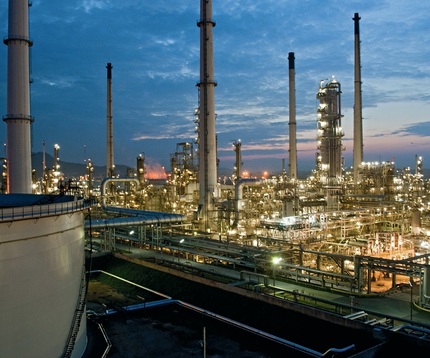
How Linde offers a low-investment route to higher capacity and lower emissions.
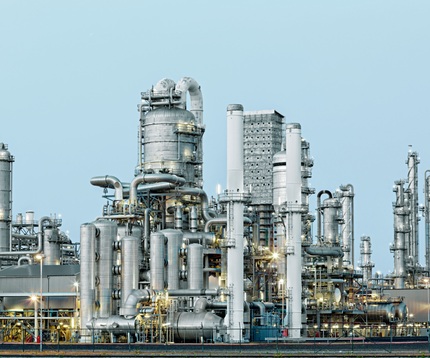
Helping chemical companies across the full value chain to lower costs, improve productivity and meet environmental targets.