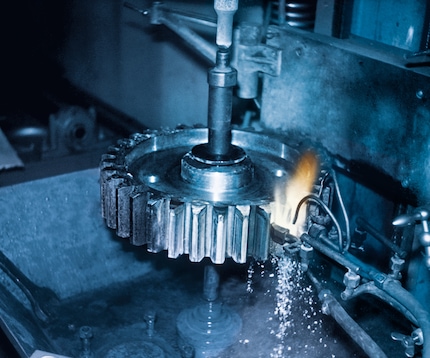
Flame Hardening
Achieve hard, wear-resistant surfaces offering improved fatigue strength with our advanced LINDOFLAMM® burner technology

We offer numerous flame heating and cooling process technologies along with complementary surfacing applications to support metal fabrication operations. Read on to discover how our engineers - who are among the most knowledgeable in the world for hot flame gas treatment processes - can help you improve quality and efficiency.
During welding or cutting, internal stresses can often cause shrinkage, warping or movement in metal or alloys. External stains like scratches, abrasions or gouges are not only an aesthetic issue but can lead to corrosion. To create a premium quality product that is free from damage or deterioration, a variety of flame heating techniques are required in metal fabrication. Examples of heating include flame straightening, flame hardening, hot forming as well as preheating and postheating in conjunction with welding. In gas welding, the flame is used for melting purposes. In the case of flame-sprayed coatings, sometimes a flame fusing process is necessary. Flame treatments may also be required to repair defects.
Hydrocarbons, such as methane, ethylene, acetylene, propane and propylene or hydrogen are used as fuel gases for flame heating. Depending on the desired properties or outcome, many different factors must be considered when choosing a fuel gas for flame treatments. You may require rapid local heating, for instance, or homogenous heating of the entire workpiece. The flame temperature and intensity depend on the fuel gases used and the oxygen mixing ratio. Acetylene and hydrogen flames can be set to a normal or reducing atmosphere, whereas all other common fuel gases have an oxidizing flame.
Here at Linde, we understand that complex and special manufacturing processes call for special solutions. We have developed a wide range of heating and surfacing process technologies to meet today’s challenges in flame heating. Our LINDOFLAMM portfolio of special acetylene burners provides tailored answers to your individual flame straightening, flame hardening, preheating, postheating, brazing, hot forming and fusing needs across the widest range of materials. In addition, we complement our state-of-the-art supply solutions and hardware with excellent consulting and customization services to help you maximize your return on investment.
Preheating/Postheating
Certain materials must be preheated before welding to avoid hardening cracks. After welding, stress relief postheating treatment may be necessary to reduce welding stress.
Flame Straightening
This technique is employed to change or restore the shape of parts that have become distorted. When a workpiece is heated beyond its yield limit and its surroundings prevent expansion, plastic deformation will occur. Once cooled, the material will shrink in size. Flame straightening can help you heat isolated spots, lines or wedges to straighten the deformation.
Melting
This involves soldering, brazing and fusing of sprayed coatings as well as flame welding.
Hot Forming
You can heat the part to be formed locally. An external force is then applied to form the part. This treatment is used for necking out pipe branch stubs, for example.
Shrink Fitting
This treatment is used to achieve a change in size (i.e. shrink parts) so shafts, bearings and similar fit securely. Liquid nitrogen can be used for cooling (shrinking) and an oxy-acetylene flame for heating (expanding). Flame Hardening You may apply a hardening treatment to change the metal structure.
Flame Hardening
You may apply a hardening treatment to change the metal structure.
Your choice of fuel gas for flame treating depends on the properties or outcome you are aiming for. You may, for instance, require rapid local heating or homogenous heating of the entire workpiece. Regardless of your flame treatment application, the right gas and supply solution can enhance both quality and productivity. Our wide LINDOFLAMM portfolio uses acetylene as the fuel gas and we can configure the setup to your needs.
For particularly complex heating challenges, we develop and manufacture tailored systems supporting partially or fully automated heating processes. Depending on your setup, these systems offer functions such as automatic ignition, gas flame temperature monitoring, temperature control and documentation.
Repair and rework in metal fabrication can be costly and time-consuming. With Linde at your side, you benefit from decades of experience and a proven track record. Complementing our broad range of special burners, our engineers can support you with their in-depth know-how and application excellence, helping you select the optimum gas supply system, setup and parameters.
Contact your Linde representative to check availability of our LINDOFLAMM special burners and fuel gases in your region.
Achieve hard, wear-resistant surfaces offering improved fatigue strength with our advanced LINDOFLAMM® burner technology
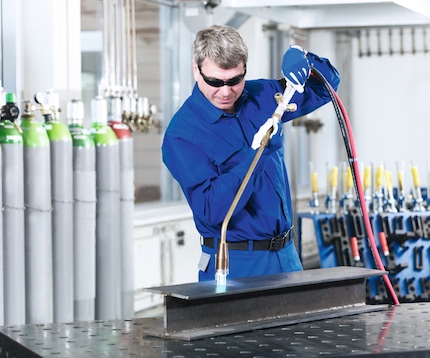
Reduce deformations in your workpiece without compromising the material with our specialized LINDOFLAMM® burners for complex tasks
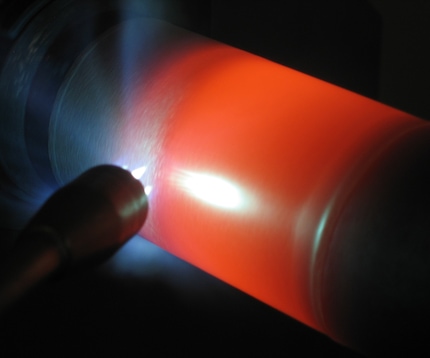
Accelerate the fusion and precision of flame-sprayed coatings for harder, denser, more homogenous results with LINDOFLAMM®
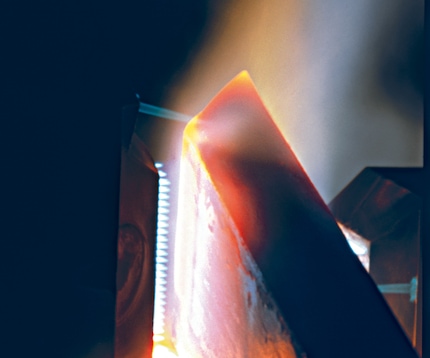
Increase process stability and accuracy while reducing material stress with LINDOFLAMM® advanced burners for hot forming
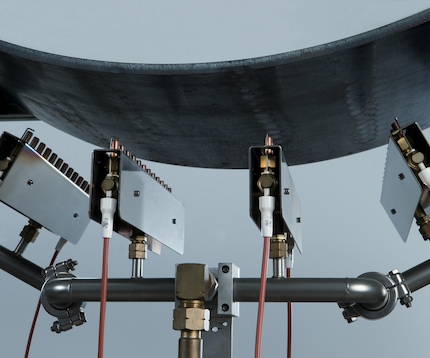
Combine extremely high thermal efficiency with accelerated preheating to maintain steel strength and integrity - with LINDOFLAMM®
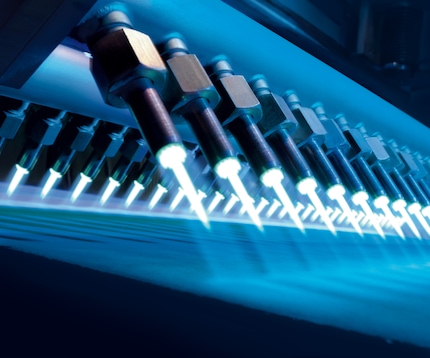
Accelerate postheating cycle times by up to 20% with LINDOFLAMM® advanced burner technology running on acetylene fuel gas